When Stable Source Water Isn’t Stable Anymore
Climate change and lake recovery are destabilizing source water quality in lakes throughout the Atlantic Northeast. To adjust, the city of Halifax worked with Hazen and the Water Research Foundation to create flexible decision tools for navigating deep uncertainty.
Listen as you go
Related Solutions:
At a Glance
- Halifax, Nova Scotia, draws its drinking water from lakes that used to have very stable water quality. But extreme weather events driven by climate change are causing short-term variability in the water quality, while lake recovery has contributed to gradual changes over several decades.
- Halifax Water needed to consider treatment upgrades to address these water quality changes. But given how costly these projects can be and how much uncertainty utilities face in long-term planning, the water provider wanted hard data and a holistic approach to inform its plans.
- Hazen partnered with Halifax Water and the Water Research Foundation to create an innovative decision support framework that included streamlined data, Power BI dashboards, and decision trees.
- Those tools gave the utility clarity about options for implementing dissolved air flotation (DAF), the foundation for a risk-based algae monitoring program, and the data and processes to make faster, better-informed decisions across its water treatment needs.
- The framework is flexible, so utilities across other regions can adapt it to give them data-backed decision support on their own water treatment questions and priorities.

Above: Halifax, Nova Scotia, is one of the easternmost cities in North America. Above, the city’s waterfront along the Atlantic Ocean. Top image: Lake Major, one of the main reservoirs supplying drinking water for Halifax, in autumn.
The Challenge: New Extremes, Higher Organic Matter, and Treatment Plants Designed for Neither
In July 2023, in just about 12 hours, roughly ten inches (about 25 centimeters) of torrential rain pounded down on the Halifax region of Nova Scotia, Canada. The area hadn’t seen that kind of precipitation since a hurricane in the early ‘70s.
Drainage systems overflowed and rivers burst their banks. The normally clear waters of Lake Major and Pockwock Lake—which supply most of Halifax's drinking water—turned dark brown from floodwaters laden with organic matter.
“We saw organic levels essentially double overnight in both lakes,” said Halifax Water Environmental Health and Safety Director Wendy Krkosek. “We’ve never seen a change of that magnitude due to precipitation, and it was sustained.”
Just a few weeks earlier, Krkosek’s team had been monitoring intense wildfires that crept close to, but thankfully didn’t reach, the lakes’ watersheds. “We went from forest fire risk to flood risk in two months,” she said.
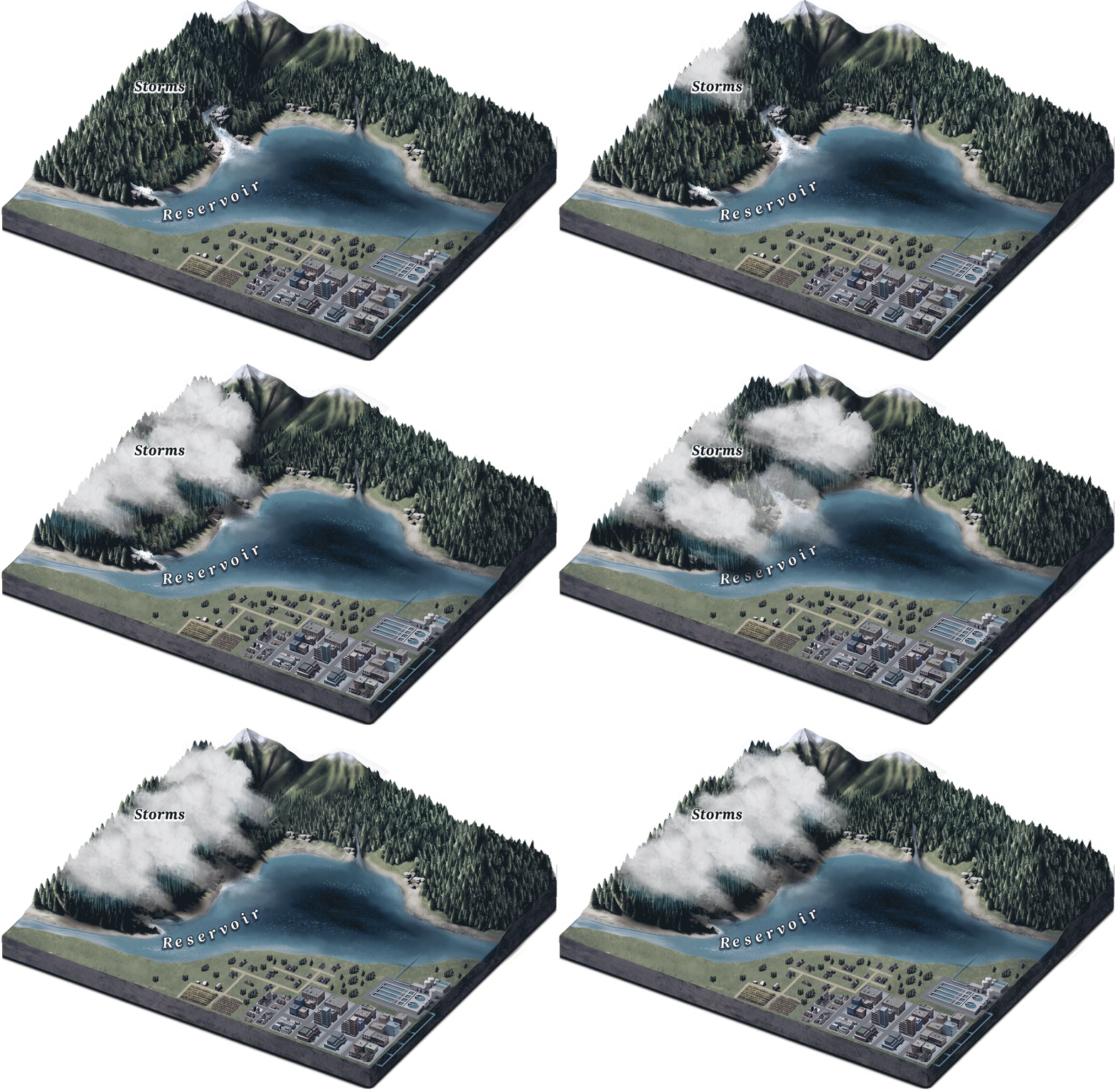
Water Quality Risks from Extreme Storms
Click on each icon to learn more.
 Source
Water
 Treatment
 Distribution
Source Water
- Dramatic shifts in raw water quality from increased runoff and sediment
- Turbidity spikes
- Higher nutrients that increase risk of algal blooms
Treatment Plant
- More chemicals needed for processes like coagulation
- Shorter filter run times
- Higher amounts of sludge to remove and manage
Distribution System / Finished Water
- Infrastructure damage
- Increased risk of DBPs and bacterial growth
The lakes’ baseline water quality has also been changing in slower, more gradual ways. Historically, Halifax Water never had issues with geosmin—a harmless taste and odor compound that can make water taste or smell unpleasant—or with the cyanobacteria that can produce it. Then, in 2012, her team detected it. Krkosek said it’s showed up in the water ever since.
She said the geosmin was one of the first indicators that the lakes’ levels of natural organic matter (NOM) have been gradually increasing, partly due to warmer temperatures and more intense rainfall events from climate change. Lindsay Anderson, who manages water quality for Halifax Water, said lake recovery from acid rain has also played a role.

Warmer temperatures spurred by climate change, lake recovery from acid rain, and turbidity spikes from floods (like the one above in Ontario in 2019) have all driven up the amount of organic matter in the lakes that are the sources of Halifax’s drinking water.
“Our water treatment plants were built a long time ago, when the lakes were very impacted by acid rain,” Anderson said. “As the lakes are recovering, the filter run times are getting shorter, we have to use more chemicals to maintain finished water quality, and there’s direct strain on the infrastructure, because the plants are starting to receive this water they weren’t designed to treat.”
Anderson said the higher organic load has also increased the risk of biological changes in the watershed and lakes and elevated disinfection byproduct (DBP) formation in the distribution system. To stay resilient amid these compounding challenges, Halifax Water needed a new path forward.

Halifax Water staff run water quality tests in the utility's lab. Photo credit: Halifax Water.
Tools for Navigating Deep Uncertainty
Halifax Water knew it might need to upgrade its drinking water plants to add clarification systems that could handle higher organic loads. But Hazen Director of Water Resources Innovations Josh Weiss said the utility wanted two things to guide its treatment decisions: hard data and a comprehensive approach to capital improvements.
“Our industry is shifting to looking at these things holistically,” Weiss said. “There’s a renewed focus on managing the source water, managing the watershed, not just relying on treatment to fix all of our issues, because that can be really expensive.”
Utilities also face more contingencies than they used to. “Historically, we had very stable water supplies,” Krkosek said. “Now, with both the discrete weather events and this longer-term, more gradual lake recovery, planning for multiple futures becomes the direction we need to take, because that uncertainty is so much greater than it has been in the past.”
Hazen partnered with Halifax Water and the Water Research Foundation to create a decision support framework to help utilities better navigate this deep uncertainty.
This flexible tool would power faster, more robust water quality management decisions through:
Streamlining data storage
Turning data into actionable insights through Power BI dashboards
Transforming key water quality management strategies into adaptable, easy-to-use decision trees
Climate Change Amplifies Existing Water Quality Risks
Climate change often exacerbates weather events that already posed water quality risks. It can also drive back-to-back events that compound each other. Here are a few examples of those risks—wildfires, storms, and algal blooms—and the impacts they can trigger. Click on each icon to learn more.
 Source
Water
Treatment
Distribution
Source Water
- Spikes in turbidity and organic matter
- Higher nutrient levels that drive algal blooms
- Infrastructure damage
Treatment Plant
- More chemicals for processes like coagulation
- Shorter filter run times
- More solids to manage
- Need for advanced treatment methods
- Infrastructure damage
Distribution System / Finished Water
- Higher risks of DBP formation and bacterial growth
- Taste and odor issues
- Infrastructure damage
- Toxins from cyanobacteria
Connecting and Assembling
The project began with a series of workshops designed to highlight existing synergies—and to look for new ones—between Halifax Water’s different teams and processes. Hazen then did a deep dive into the utility’s many data streams: where the information went, what it contained, and what gaps and siloes needed addressing.
“Halifax Water is a very forward-looking utility, so they were doing better than average in connecting the dots,” Weiss said. “Even so, there were challenges. Their watershed and tributary data lived in an Excel database, their lab monitoring went to a lab data system. There were these different warehouses of data that weren’t talking to each other.”
After identifying how to better sync Halifax Water’s data, the team got to work turning all the qualitative and quantitative information they’d collected into a Power BI dashboard and a set of decision trees that were both ready for Halifax to use and flexible enough for other utilities to adapt.

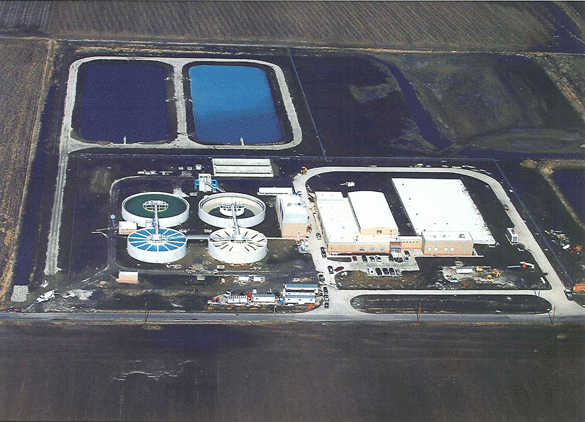
Data and insights from the decision support framework pointed to dissolved air flotation (DAF) as an ideal upgrade to help Halifax Water manage the higher levels of organic matter in its source waters. Above, a set of Hazen-designed DAF units for Celina, Ohio.
Clarity and Confidence
Krkosek said one of the biggest takeaways from the decision support tool was hard data confirming what they’d suspected: Halifax Water’s water treatment plant, which currently uses direct filtration, would benefit from adding a clarification system. “It was very clear that the water quality trends we saw were resulting in us being outside the design parameters of the facility that we have,” she said.
Krkosek and Anderson said that Halifax Water is now exploring dissolved air flotation (DAF) as a potential clarification system to see whether it could meet treatment goals while addressing other long-term needs they’re also considering.

A pump station and windmills bordering Pockwock Lake, one of Halifax Water's main source waters. Photo credit: Halifax Water.
Anderson said her team relies heavily on some of the key dashboards from the tool, which they’ve continued adapting for their own system. She clicked through a series of maps and charts in a DBP risk dashboard, explaining that it allows her team to “trend back in time to be able to understand, is this an event, or is this just a seasonal change that we shouldn’t be surprised by. It would take hours—a day, even—to manually get that information without these dashboards.”
The decision trees from the framework have also become embedded in the utility’s operations. Before this project, Anderson explained, the requirement for monitoring and responding to algal blooms was more observational: “Look at the intake, and if you see pea soup, take a sample and report it.” Now, thanks to an algae decision tree and monitoring program the utility developed based on the decision support tool, “we would see a change before an operator would ever see something growing in the lake.”
She said the more robust data management and tools Halifax Water established with Hazen will empower her team to face the next big water quality event—whether it’s a flood or an algal bloom—with more information and more confidence.
“It takes a lot of stress out of situations, because you know what you’re going to look at and how you’re going to use it to make decisions,” Anderson said. “I don’t know how people would make decisions without having these tools in their toolbox and knowing what to monitor.”

Halifax Water is seeing more short-term water quality fluctuations from extreme weather, as well as gradual increases in organic matter associated with lake recovery, in the waters of Lake Major (above) and Pockwock Lake. Photo credit: Halifax Water.