As society’s waste stream grows larger and more complex, preservation of public health and the environment requires thoughtful innovation in wastewater engineering and treatment processes. Hazen and Sawyer has long been at the forefront of this innovation, maintaining the industry’s top expertise in biological nutrient removal, high-rate disinfection, and advanced membrane processes, as well as traditional primary and secondary wastewater treatment.
-
To address struvite issues and a stringent phosphorus limit (0.08 mg/L) at F. Wayne Hill Water Resources Center, Gwinnett County undertook a pilot program and business case evaluation to assess the potential for a nutrient recovery process that treats phosphorus and ammonia while producing marketable fertilizer as a by-product.
-
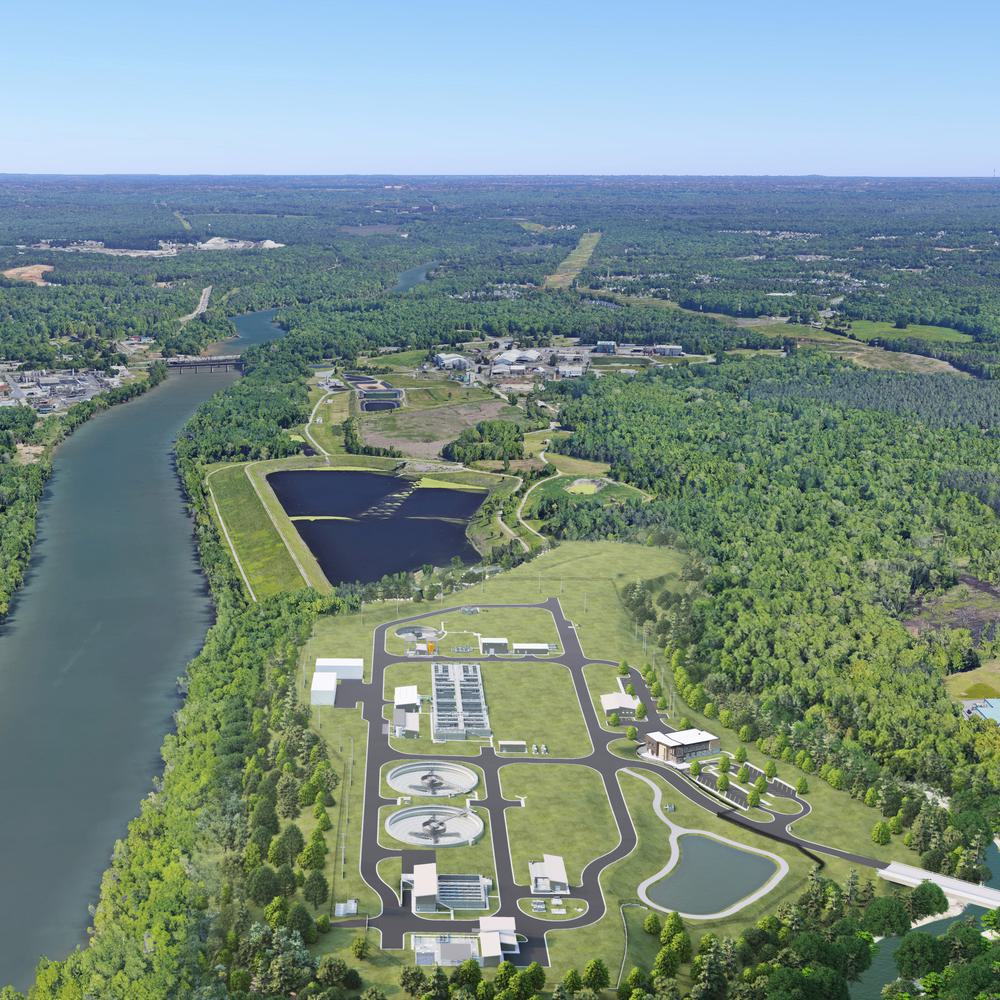
We're assisting Henrico County to expand plant capacity from 45 mgd to 75 mgd in multiple design and construction stages, and designing an upgrade to increase the plant’s nutrient removal and ensure compliance with more stringent regulatory standards to come.
View full image
-
For the 30-mgd Nansemond WWTP, we designed a plant expansion and upgrade that will meet an ammonia limit of 2 mg/L and a total nitrogen limit of 10 mg/L year-round.
View full image
-
Improvements to the Neuse River facility included a new equalization basin to handle wet weather flows, facilities for total nitrogen removal, a sludge management plan, and conversion of the existing chlorine contact tanks to ultraviolet disinfection contractors.
View full image
-
Using state-of-the-art simulations tools, like Biowin, we are able to test our designs using a wide range of variables - ensuring that your facility can meet its goals under even the most challenging conditions.
View full image
-
We are currently upgrading the South District WWTP to high-intensity ultraviolet light and hydrogen peroxide, an advanced oxidation process, creating the largest facility (285-mgd) in the State of Florida that treats to stringent reclaimed water standards.
View full image
-
For NYC's Applied Research Program, we evaluate potential future permit requirements and potential emerging technologies that could meet future effluent limits. Integrated Fixed-Film Activated Sludge (IFAS) has shown promise for other utilities that are required to meet extremely low levels of Nitrogen discharge.
View full image
-
View full image
-
We use our 2Dc CFD Clarifier model to identify potential improvements to existing infrastructure and operating strategies, providing improved reliability in meeting stringent requirements and improved capital cost control through better use of existing facilities.
View full image
-
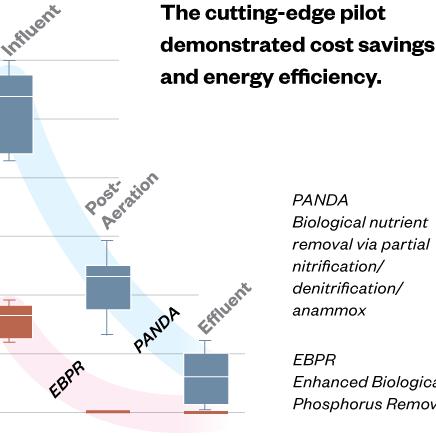
In anticipation of required nutrient reduction, Broward County undertook a pilot program to evaluate cost effective process modifications that would achieve the necessary reductions at the North Regional Wastewater Treatment Plant.
View full image
-
The UCONN reuse system utilizes an innovative process to treat wastewater effluent before delivering it for use as boiler feedwater and makeup for cooling towers and chillers.
View full image
-
To design the T.P. Smith Water Reclamation Facility, we used 3D CAD to accommodate both congested existing yard piping and the flight paths of the adjacent airport, accelerating approvals and permitting, and Biowin and CFD modeling to make sure stringent effluent limits were met quickly and cost-effectively.
View full image
-
The OWASA/UNC Chapel Hill reclaimed wastewater system is the culmination of five years of careful planning, comprehensive financial and technical feasibility studies, pilot scale testing, microbial risk assessment, detailed contract negotiations, final design, permitting and construction, and a thorough testing and acceptance strategy.
View full image
-
Rising costs are causing some utilities to consider low strength on-site hypochlorite generation (OSHG) systems as an alternative approach to providing equivalent chlorine. The low strength OSHG process is based on the electrolysis of brine, an electrochemical process that consumes salt (either solar or food grade salt), water, and power to produce a NaOCl solution.
View full image
-
For large utilities with high sodium hypochlorite demands and the capability of using excess caustic, high strength on-site hypochlorite generation (OSHG) systems have been seriously considered. The high strength OSHG process uses high purity salt to produce two primary products; wet chlorine gas and sodium hydroxide (caustic).
View full image
-
The Master Plan for the LeSourdesville WRF included plans for upgrade and expansion of its dry and wet weather capacities in three phases, along with measures to facilitate its compliance with anticipated future changes in regulatory limits.
View full image
-
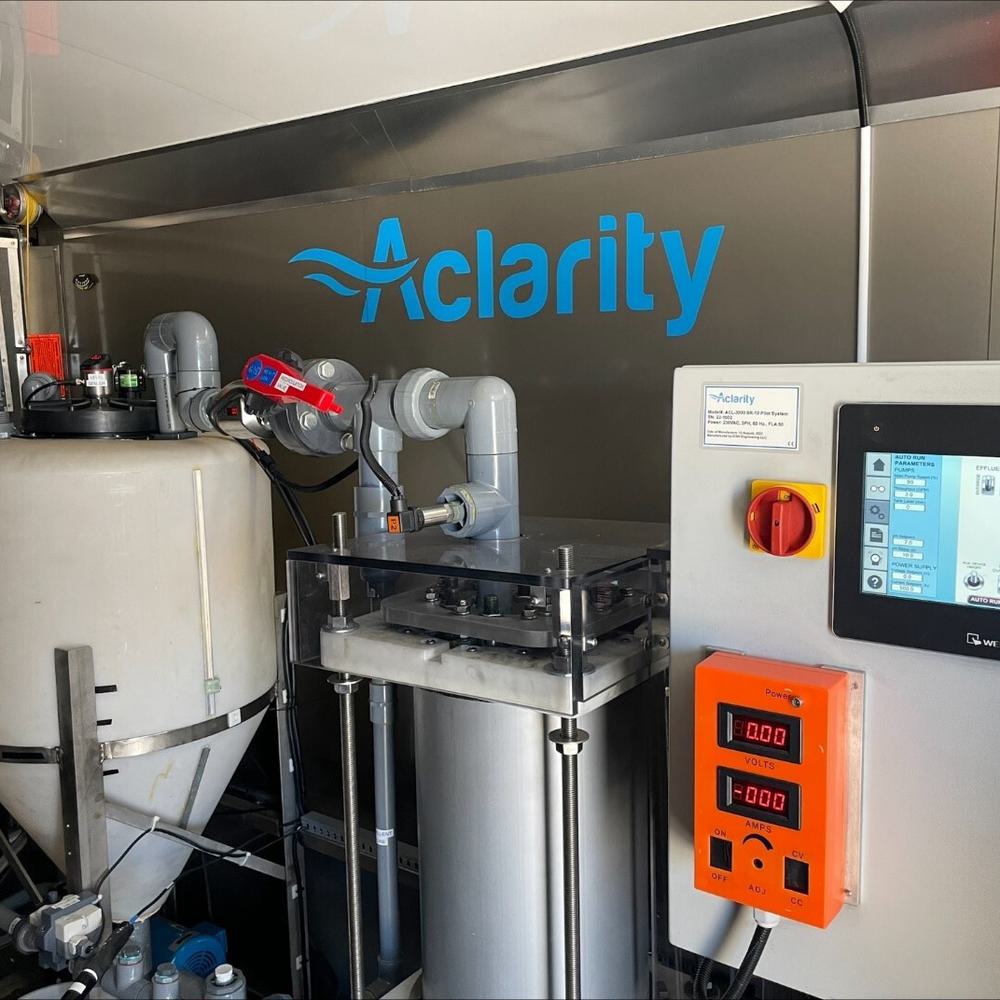
Mobile pilot plants enable us to study advantageous process schemes on-site, using actual working inputs and conditions.
View full image
-
Our designs tackle foam, a problem in many BNR/ENR facilities, with multiple lines of defense, including surface wasting, RAS chlorination, polymer addition, and froth hoods.
View full image
-
To address struvite issues and a stringent phosphorus limit (0.08 mg/L) at [[F. Wayne Hill Water Resources Center]], Gwinnett County undertook a pilot program and business case evaluation to assess the potential for a nutrient recovery process that treats phosphorus and ammonia while producing marketable fertilizer as a by-product.
-
We're assisting [[Henrico County]] to expand plant capacity from 45 mgd to 75 mgd in multiple design and construction stages, and designing an upgrade to increase the plant’s nutrient removal and ensure compliance with more stringent regulatory standards to come.
-
For the 30-mgd [[Nansemond WWTP]], we designed a plant expansion and upgrade that will meet an ammonia limit of 2 mg/L and a total nitrogen limit of 10 mg/L year-round.
-
Improvements to the [[Neuse River facility]] included a new equalization basin to handle wet weather flows, facilities for total nitrogen removal, a sludge management plan, and conversion of the existing chlorine contact tanks to ultraviolet disinfection contractors.
-
Using [[state-of-the-art simulations tools]], like Biowin, we are able to test our designs using a wide range of variables - ensuring that your facility can meet its goals under even the most challenging conditions.
-
We are currently upgrading the [[South District WWTP]] to high-intensity ultraviolet light and hydrogen peroxide, an advanced oxidation process, creating the largest facility (285-mgd) in the State of Florida that treats to stringent reclaimed water standards.
-
For NYC's Applied Research Program, we evaluate potential future permit requirements and potential emerging technologies that could meet future effluent limits. Integrated Fixed-Film Activated Sludge (IFAS) has shown promise for other utilities that are required to meet extremely low levels of Nitrogen discharge.
-
A 5-stage biological phosphorus-nitrogen removal (BNR) process was determined to be the most cost-effective, involving lower capital and operations and maintenance costs for the [[North and South Durham Water Reclamation Facilities]].
-
We use our 2Dc CFD Clarifier model to identify potential improvements to existing infrastructure and operating strategies, providing improved reliability in meeting stringent requirements and improved capital cost control through better use of existing facilities.
-
In anticipation of required nutrient reduction, Broward County undertook a pilot program to evaluate cost effective process modifications that would achieve the necessary reductions at the [[North Regional Wastewater Treatment Plant]].
-
The [[UCONN reuse system]] utilizes an innovative process to treat wastewater effluent before delivering it for use as boiler feedwater and makeup for cooling towers and chillers.
-
To design the [[T.P. Smith Water Reclamation Facility]], we used 3D CAD to accommodate both congested existing yard piping and the flight paths of the adjacent airport, accelerating approvals and permitting, and Biowin and CFD modeling to make sure stringent effluent limits were met quickly and cost-effectively.
-
The [[OWASA/UNC Chapel Hill reclaimed wastewater system]] is the culmination of five years of careful planning, comprehensive financial and technical feasibility studies, pilot scale testing, microbial risk assessment, detailed contract negotiations, final design, permitting and construction, and a thorough testing and acceptance strategy.
-
Rising costs are causing some utilities to consider low strength on-site hypochlorite generation (OSHG) systems as an alternative approach to providing equivalent chlorine. The low strength OSHG process is based on the electrolysis of brine, an electrochemical process that consumes salt (either solar or food grade salt), water, and power to produce a NaOCl solution.
-
For large utilities with high sodium hypochlorite demands and the capability of using excess caustic, high strength on-site hypochlorite generation (OSHG) systems have been seriously considered. The high strength OSHG process uses high purity salt to produce two primary products; wet chlorine gas and sodium hydroxide (caustic).
-
The Master Plan for the [[LeSourdesville WRF]] included plans for upgrade and expansion of its dry and wet weather capacities in three phases, along with measures to facilitate its compliance with anticipated future changes in regulatory limits.
-
Mobile pilot plants enable us to study advantageous process schemes on-site, using actual working inputs and conditions.
-
Our designs tackle foam, a problem in many BNR/ENR facilities, with multiple lines of defense, including surface wasting, RAS chlorination, polymer addition, and froth hoods.
We have helped clients develop new, technologically-advanced wastewater treatment plants from less than one to more than 300 million gallons per day (mgd) capacity, each uniquely designed and built to meet specific desired outcomes. Just as often, we have assisted in the rehabilitation, upgrading, and expansion of existing plants. Our engineers are skilled in maximizing the use of existing structures and equipment and our careful project sequencing keeps plants in service during the phase-in of new facilities.
Through decades of experience assisting numerous treatment plants through various levels of upgrades, we have developed a state-of-the-art, site-specific approach to process modeling, design, and optimization using the BioWin™ simulator. Our extensive modeling library enables us to identify the most appropriate technology to meet any individual plant’s needs, accounting for process optimization, regulatory compliance, and energy efficiency.
Our approach also includes expert analysis and optimization of secondary clarifier performance using the 2Dc model – a state-of-the-art quasi-three-dimensional Computational Fluid Dynamics (CFD) model that can be used for circular or rectangular clarifiers. We also employ Life Cycle Analysis (LCA) and Total Cost Accounting (TCA) to assess both the internal costs (those borne by the utility) and external costs (those borne by society) of different design options, enabling decision-makers to consider each.
Hazen and Sawyer has also planned, designed and managed the construction of numerous sludge management facilities for both new and upgraded plants. These facilities range from lagoons to advanced highsolids sludge dewatering systems that yield the greatest possible disposal efficiency of plant residuals. Effluent, residuals and biosolids can often become an asset through any number of beneficial reuse options. From vast agricultural irrigation systems, energy generation facilities and aquifer recharge fed by treated wastewater, to fertilizer production from treated sludge, these reclamation and reuse projects can address both resource demands and market potential.
Wastewater @ Hazen and Sawyer
Paul Pitt, Ph.D., P.E.
Process Group Leader
Clients in need of top technical work need look no further than Hazen and Sawyer. We offer unparalleled expertise in process modeling, along with a particular talent for maximizing the use of existing facilities and maintaining the continuous operation of facilities during upgrades and/or expansion. No firm is better able to help you more cost-effectively achieve your goals.
Our commitment to success is equaled only by our commitment to research and advancing the field of wastewater engineering. You can trust us to solve your toughest challenges.
For inquiries contact: Paul Pitt, Ph.D., P.E., at .(JavaScript must be enabled to view this email address)